







On routes of more than 300 km, industrial vehicles equipped with hydrogen fuel cells are economically more advantageous than battery-electric vehicles, with cost reductions of up to 55%. This is the main finding of a study conducted by Enea and Università della Tuscia (University of Tuscia), published in the international Journal of Hydrogen Energy, which for the first time compares the total cost of ownership of commercial vehicles fitted with four different propulsion technologies: diesel, hydrogen internal combustion, battery-electric and hydrogen fuel cells, the latter analysed in both constant-power and variable-power configurations. The analysis covers four weight categories, with gross vehicle weights of 3.5, 5.2, 18 and 44 tonnes, and daily distances ranging from 100 to 700 km.
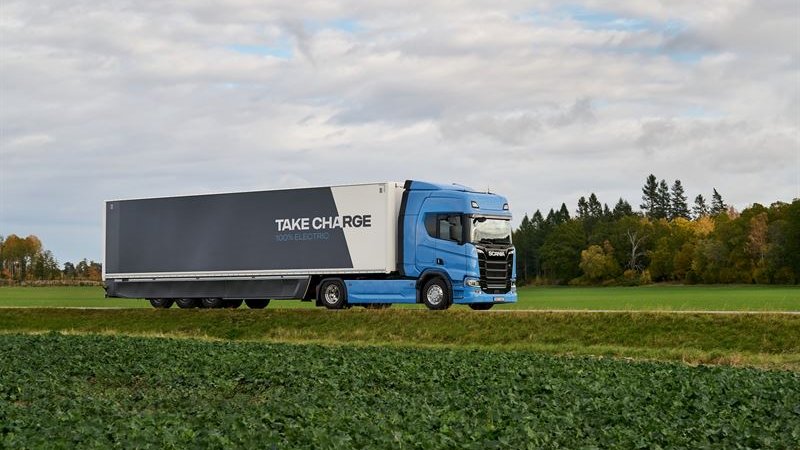
For heavy vehicles, the study data show that battery-electric vehicles (BEVs) are more expensive than hydrogen fuel cell vehicles in almost all the scenarios analysed. In the 18-tonne category, over distances of 100 km a day, the total cost of ownership of BEVs is 14.4% higher than that of fuel cell vehicles. In the 44-tonne category, the gap stands at 4.9%. The difference widens considerably on longer routes: at 700 km, BEVs are more than 52% more expensive than fuel cell vehicles in both weight categories.
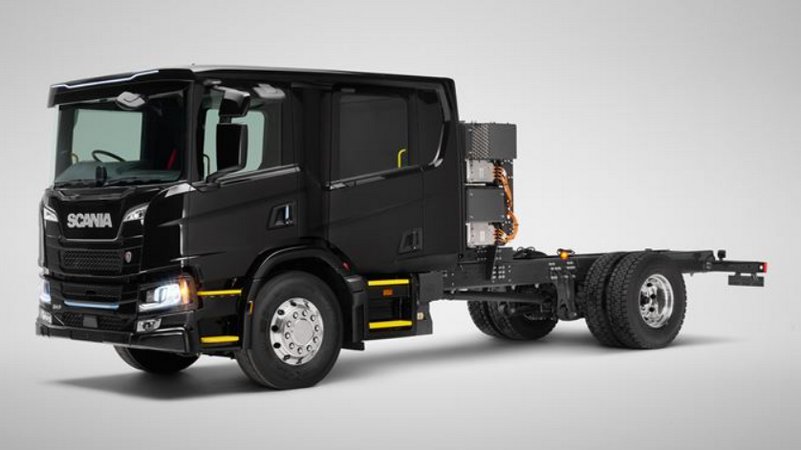
According to the researchers, the reasons for this competitive disadvantage mainly lie in the cost structure associated with batteries. As Viviana Cigolotti, head of Enea’s Divisione Tecnologie e vettori per la decarbonizzazione (Technologies and carriers for decarbonisation division) within the Dipartimento Tecnologie energetiche e fonti rinnovabili (Department of energy technologies and renewable sources) and co-author of the study, explains: “Overall, BEVs are the most energy-efficient but pay the price in terms of load capacity, especially on longer routes. The main factors weighing on them are the higher costs of purchasing and replacing the batteries halfway through the vehicle’s life and, of course, their size. As a result, they are less competitive than fuel cell vehicles.”
In fuel cell vehicles, the battery pack serves only as a buffer and can be up to 12 times smaller than that installed in BEVs. Vehicle range is provided by the fuel cell itself, with energy stored in a compressed hydrogen tank that offers a higher gravimetric density, meaning the weight of storage per unit of stored energy, than conventional batteries. Another element emerging from the analysis concerns the relationship between the vehicle’s weight category and transport costs over its entire useful life. Regardless of the propulsion technology used, heavy vehicles of 18 and 44 tonnes show lower overall costs than lighter vehicles of 3.5 and 5.2 tonnes, thanks to their greater available load capacity.
The study clearly identifies a hierarchy among zero-emission technologies. For freight transport, hydrogen fuel cells offer advantages over BEVs in medium- and long-distance applications and for vehicles of up to 18 tonnes. Diesel remains the option with the lowest total cost of ownership, but hydrogen gains significant ground as daily distances increase. The researchers stress, however, that this is still a developing sector that requires further analysis and testing to assess costs and efficiency in full, and that the analysis will need to be extended to hydrogen production and distribution scenarios for road transport.